
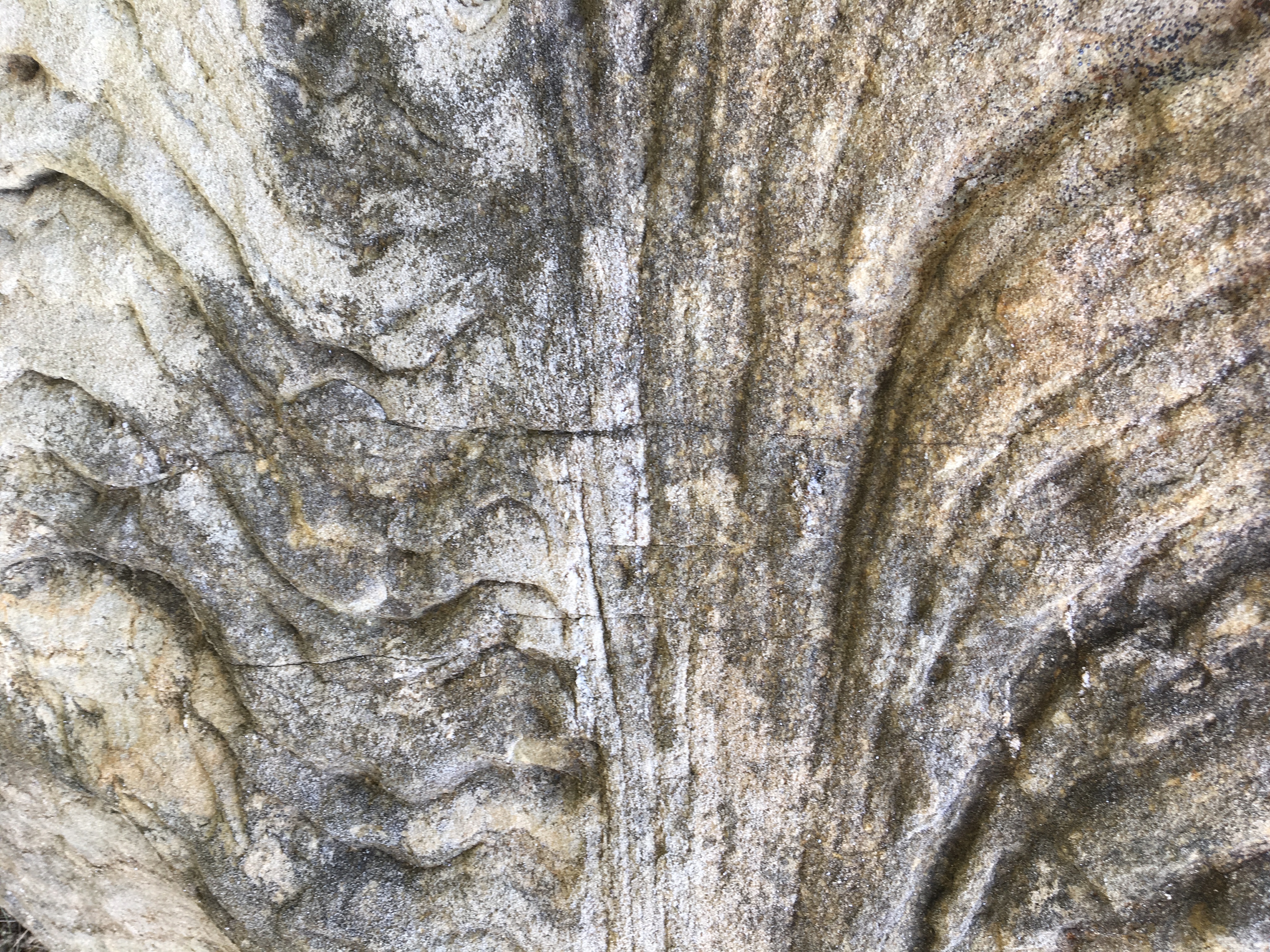
1848–1854
Texas, Maryland
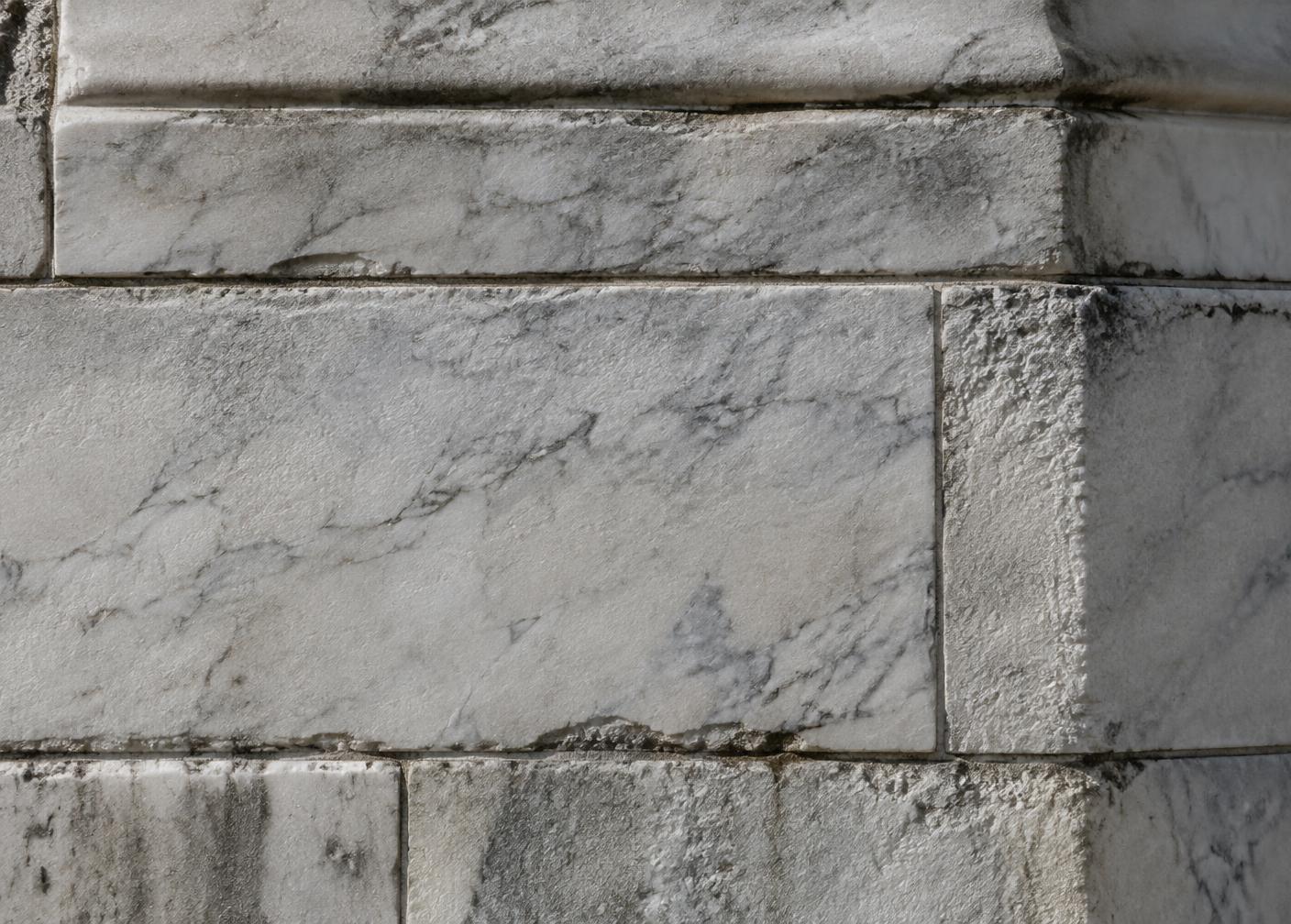
Early Cockeysville marble facing over gneiss backing. Campbell Quarry marble specimen; not an identified monument block.2,8,21
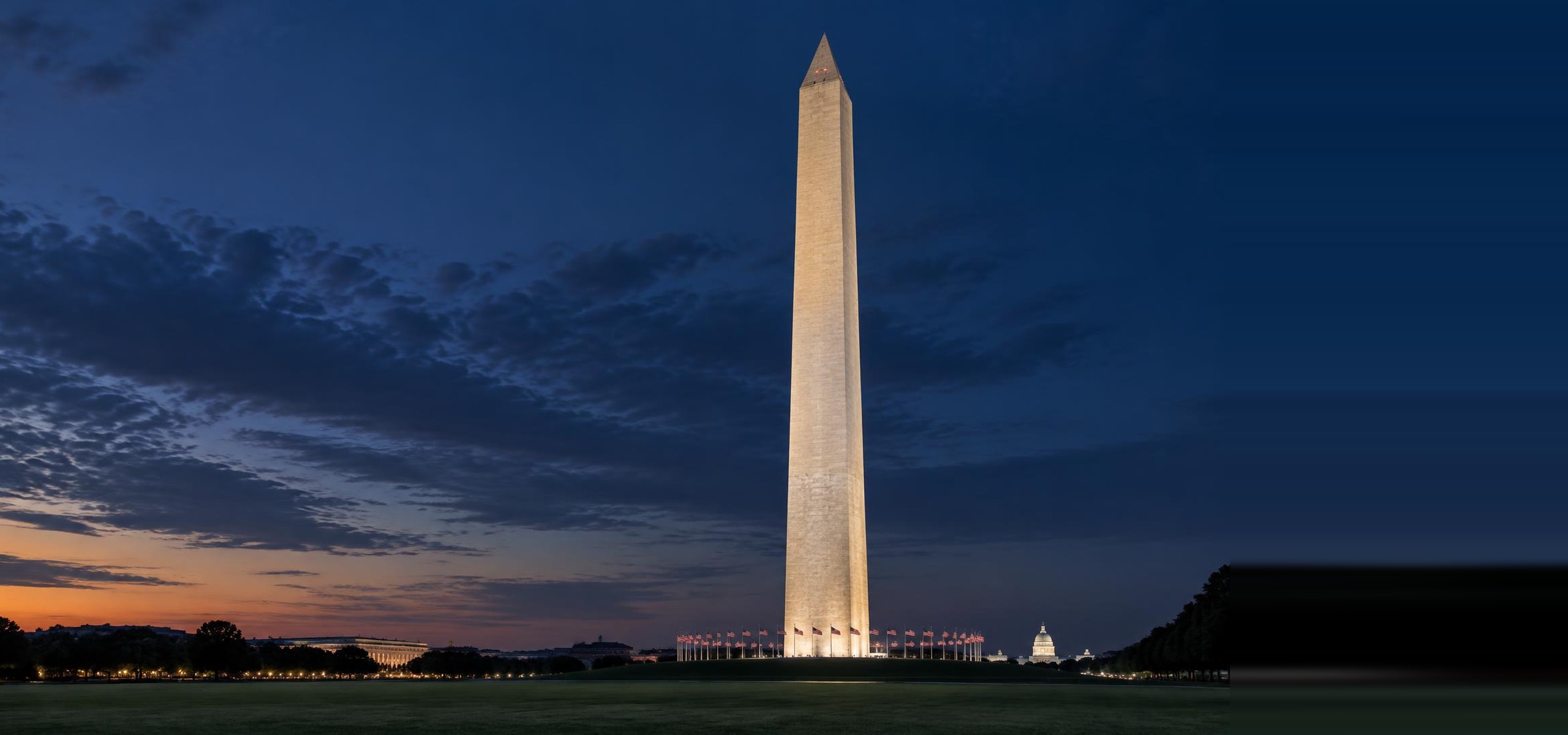
Washington, D.C.
Built to honor George Washington and his central role in the nation’s founding and independence, the monument became a public undertaking in stone1,16. Built from about 36,000 stones and faced in marble from three documented sources over more than three decades, from 1848 to 1884, its construction traces a young nation growing alongside it1,4,6,7,8.
The National Idea
Americans sought a memorial equal to Washington’s place in independence and the new republic. The Society formed in 1833, raised public subscriptions, and selected Robert Mills’s design three years later16,17.
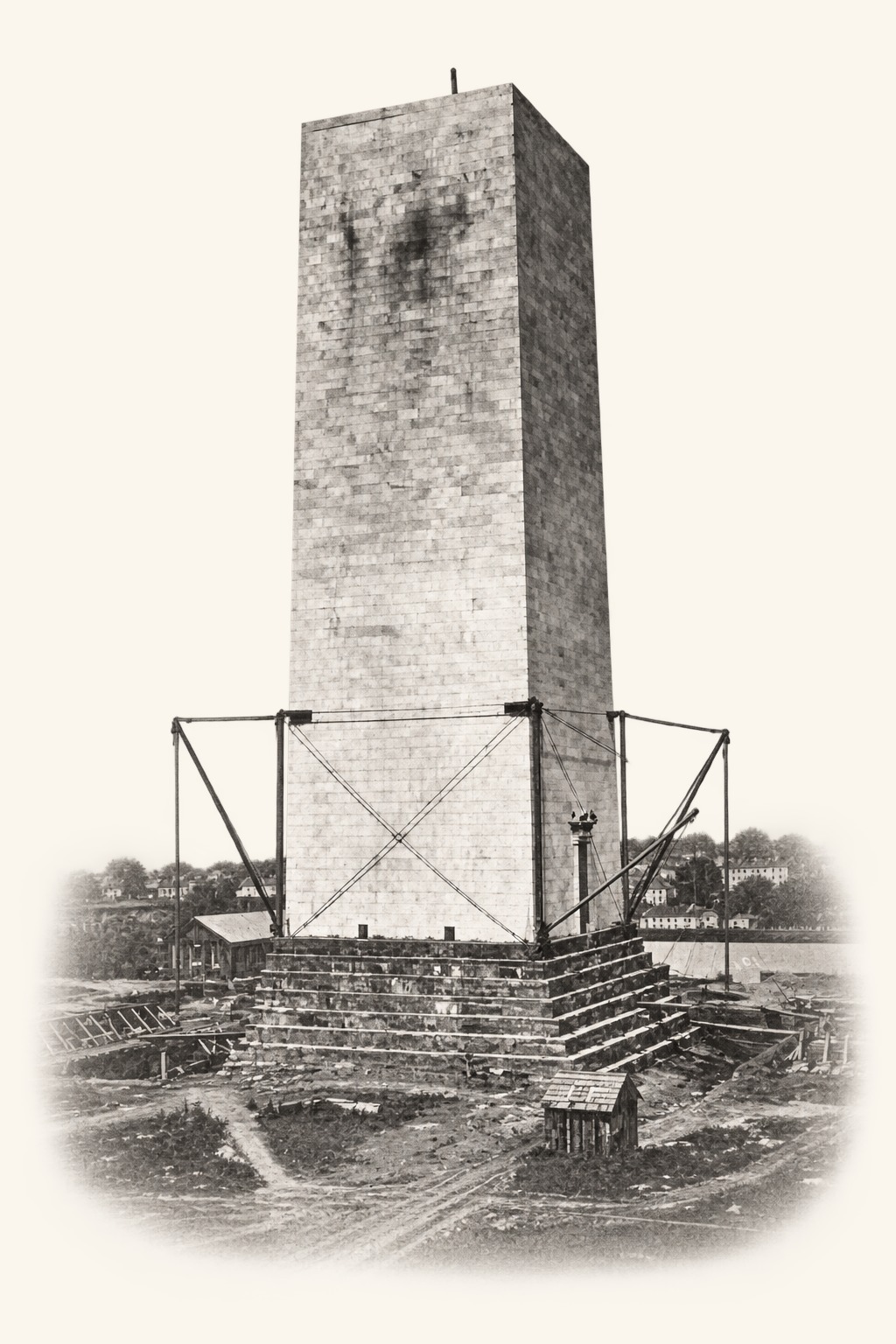
Mills imagined an obelisk above a circular pantheon. Cost removed the pantheon; the shaft endured. Construction began in 1848, stopped for more than two decades, and resumed under federal engineers before completion in 18841,4.
A Monument Written In Marble
One shaft. Two building eras.
From a distance, the monument reads as one white form. Its exterior is a relatively thin marble facing over structural masonry: gneiss in the first campaign and granite in much of the resumed work2,5.
Work stopped in 1854 at about 152 feet. When federal engineers resumed construction, the original supply could not simply continue. A few Lee, Massachusetts courses bridged the work before Beaver Dam marble carried the shaft upward1,7,8. Different quarry beds and a quarter-century of unequal weathering made the seam visible.
The masonry is a visible record of interruption, material choice, engineering, and time.
Stone Sources & Timeline
1848–1854
Early Cockeysville marble facing over gneiss backing. Campbell Quarry marble specimen; not an identified monument block.2,8,21
1880 · brief interval
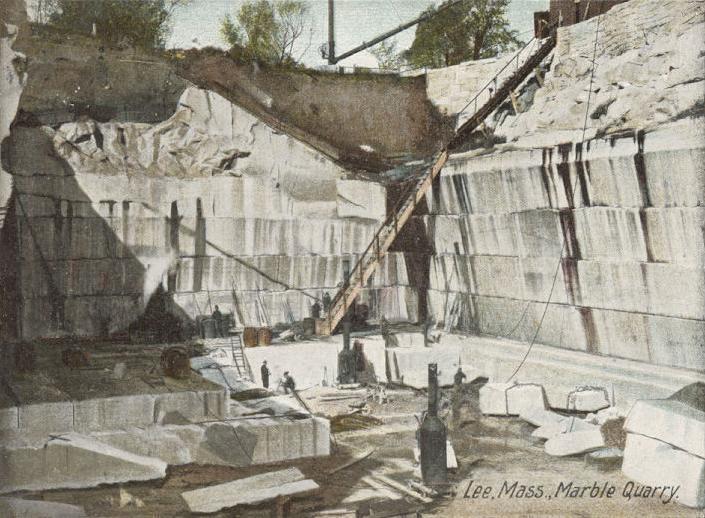
A few stop-gap courses at the seam; records differ on whether three or four. Historic Lee quarry view; not the documented 1880 extraction scene.8,22
1880–1884
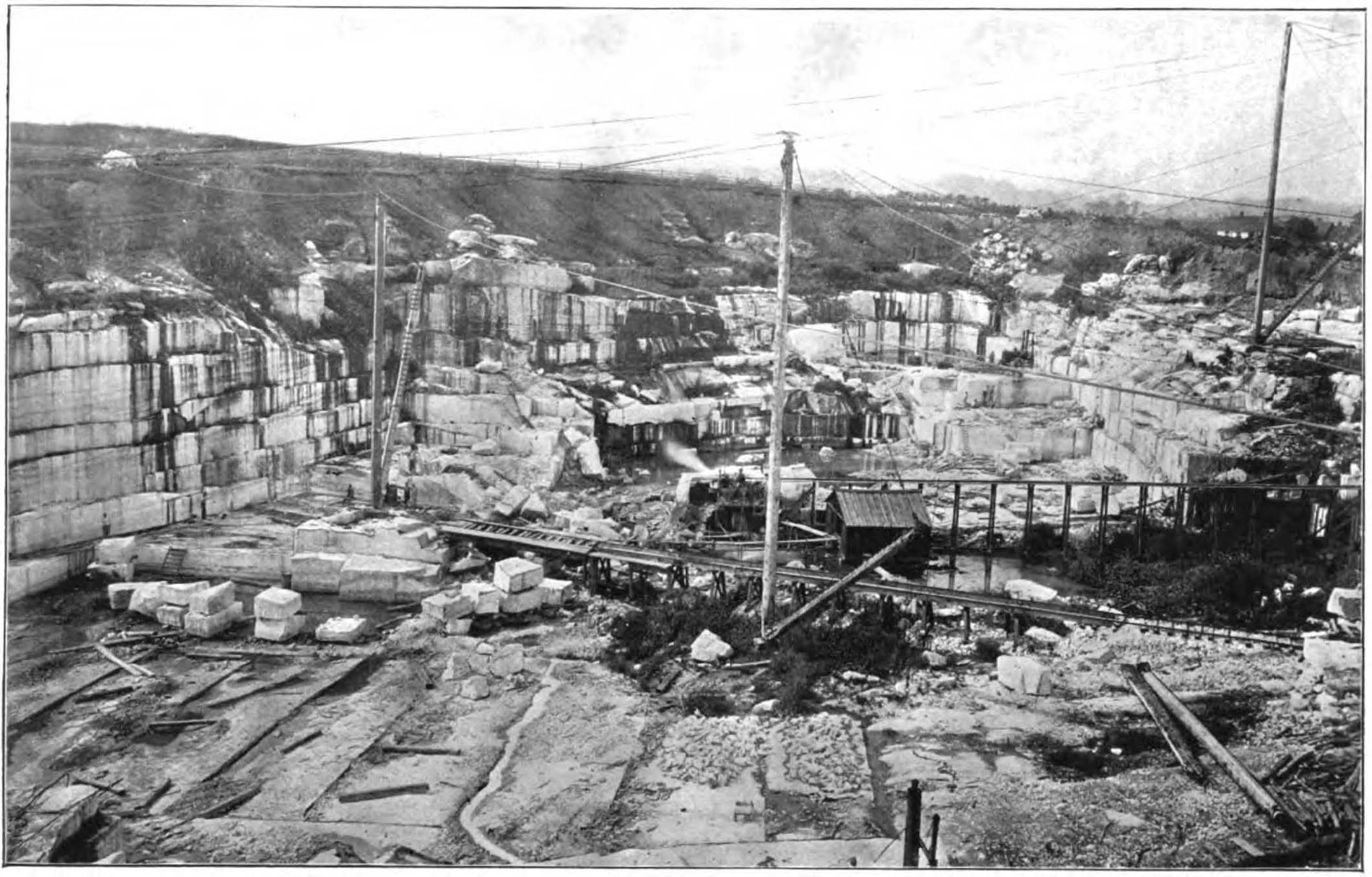
Later Cockeysville marble over structural granite. Quarry plate, 1898.5,7,20
A Closer Look
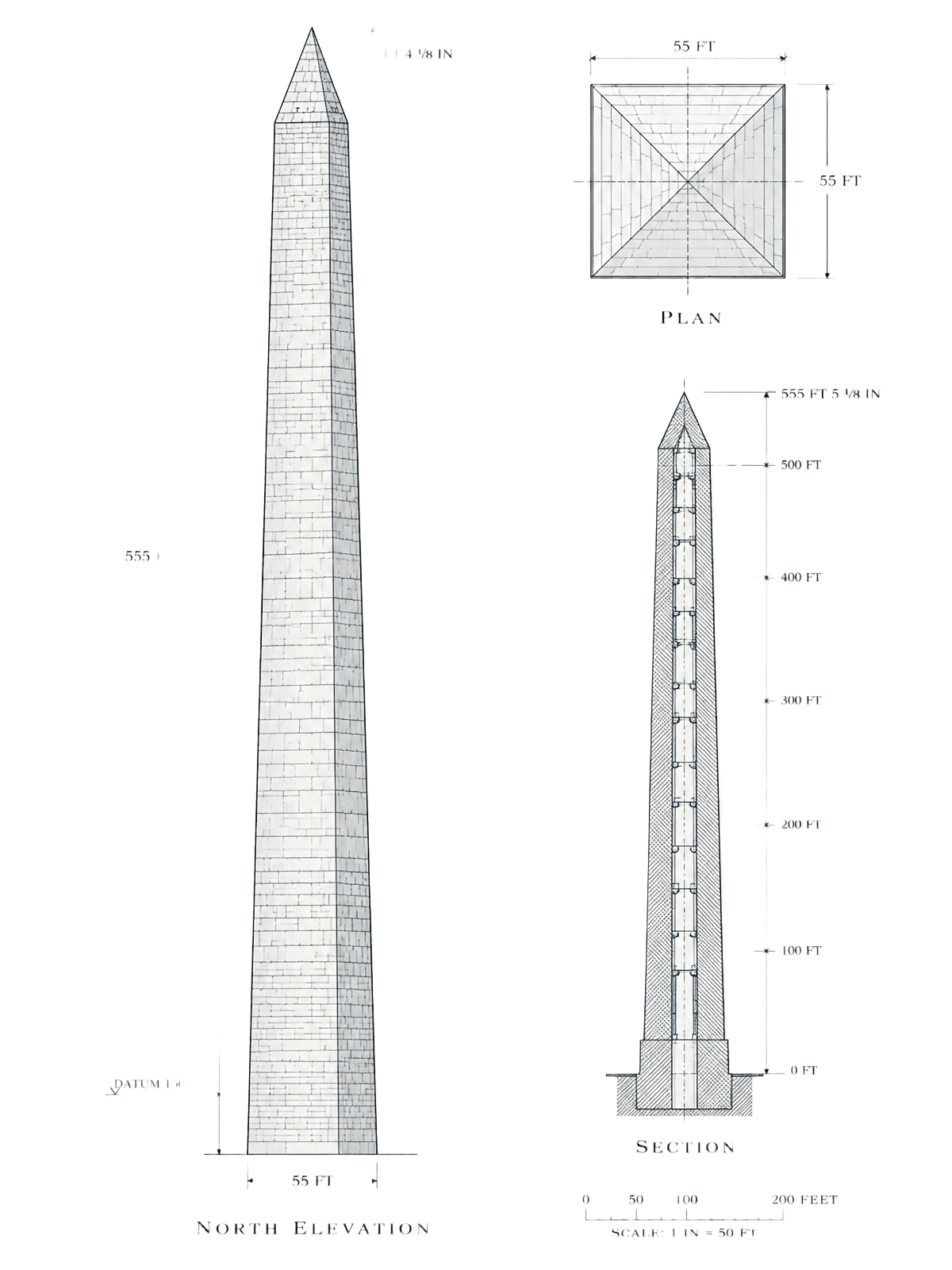
The line near 150 feet marks the long interruption. The lower stone had weathered for roughly twenty-five years before later marble was set. Different quarry beds, plus the narrow Lee interval, make the two construction eras legible on the exterior6,7,8.
Interpretive elevation · geometry after HABS DC-42814






Sources & Accuracy
Dimensions, quarry sources, course heights, and dates on this page are drawn from published Park Service, Library of Congress, USGS, and peer-reviewed sources, cited inline by number.
A stone-by-stone map of the exterior — the width and position of all 10,652 facing blocks in this registry — is not publicly documented. Those positions are reconstructed from documented course heights and the documented taper, and are labelled as reconstructed geometry rather than an as-built record.
The Registry
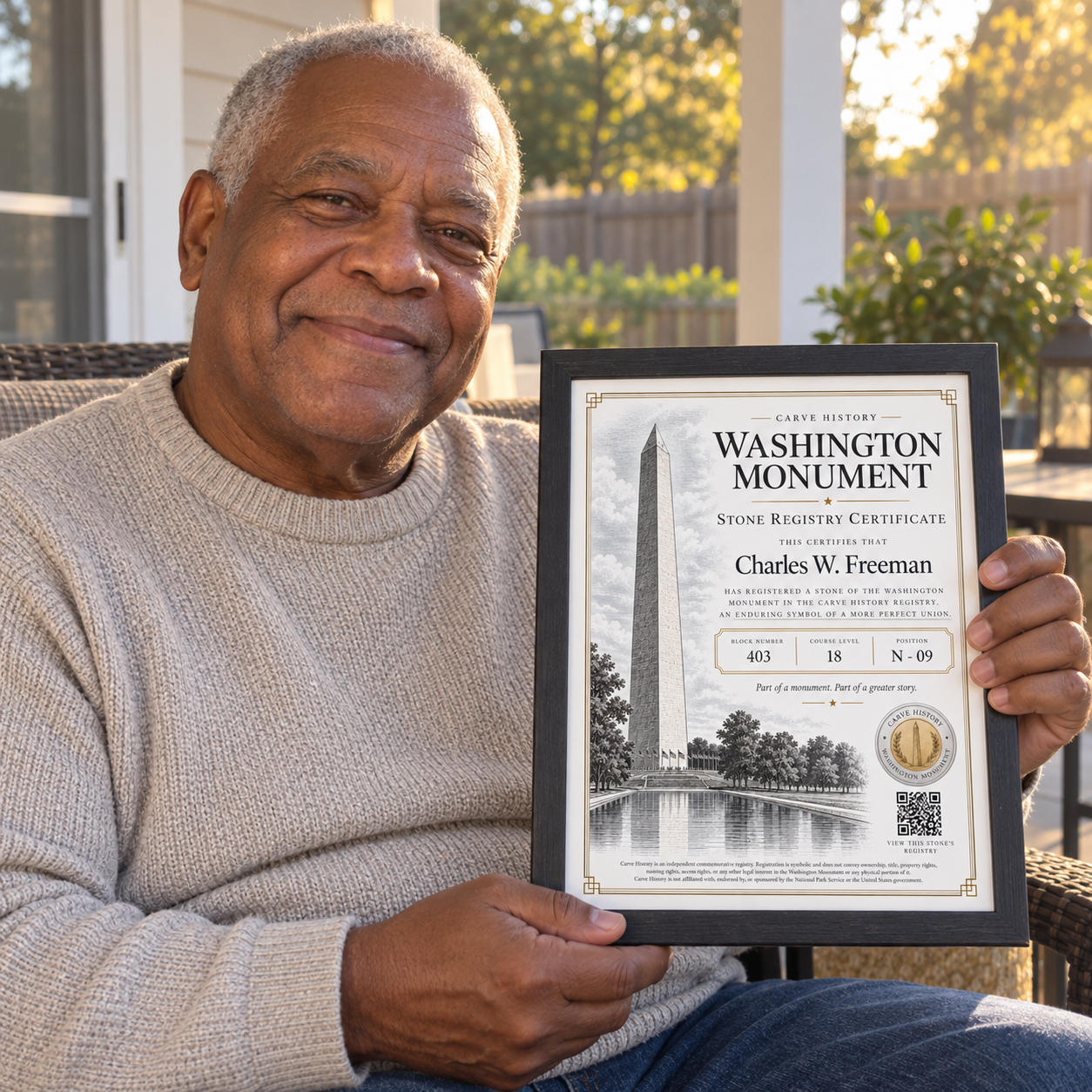
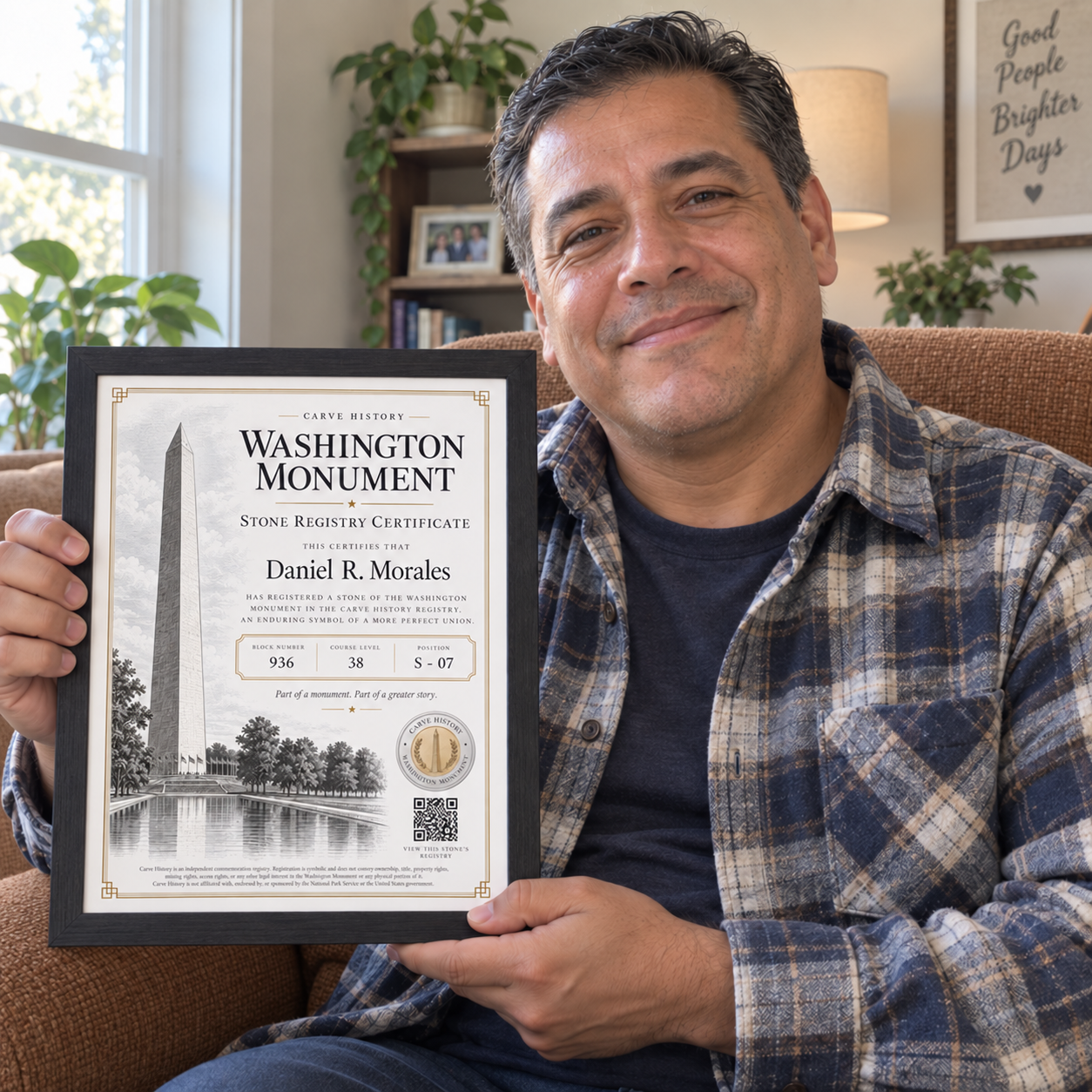
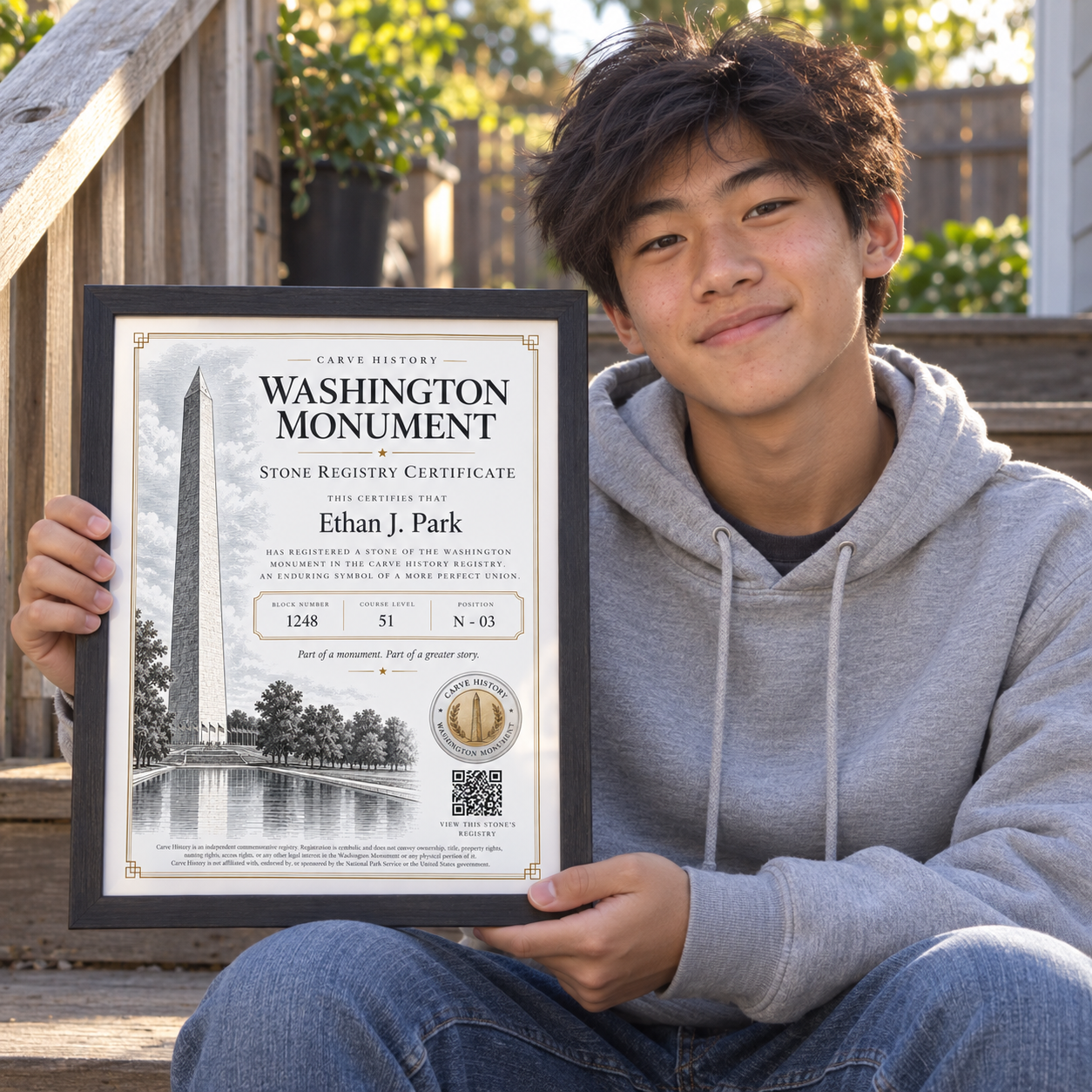
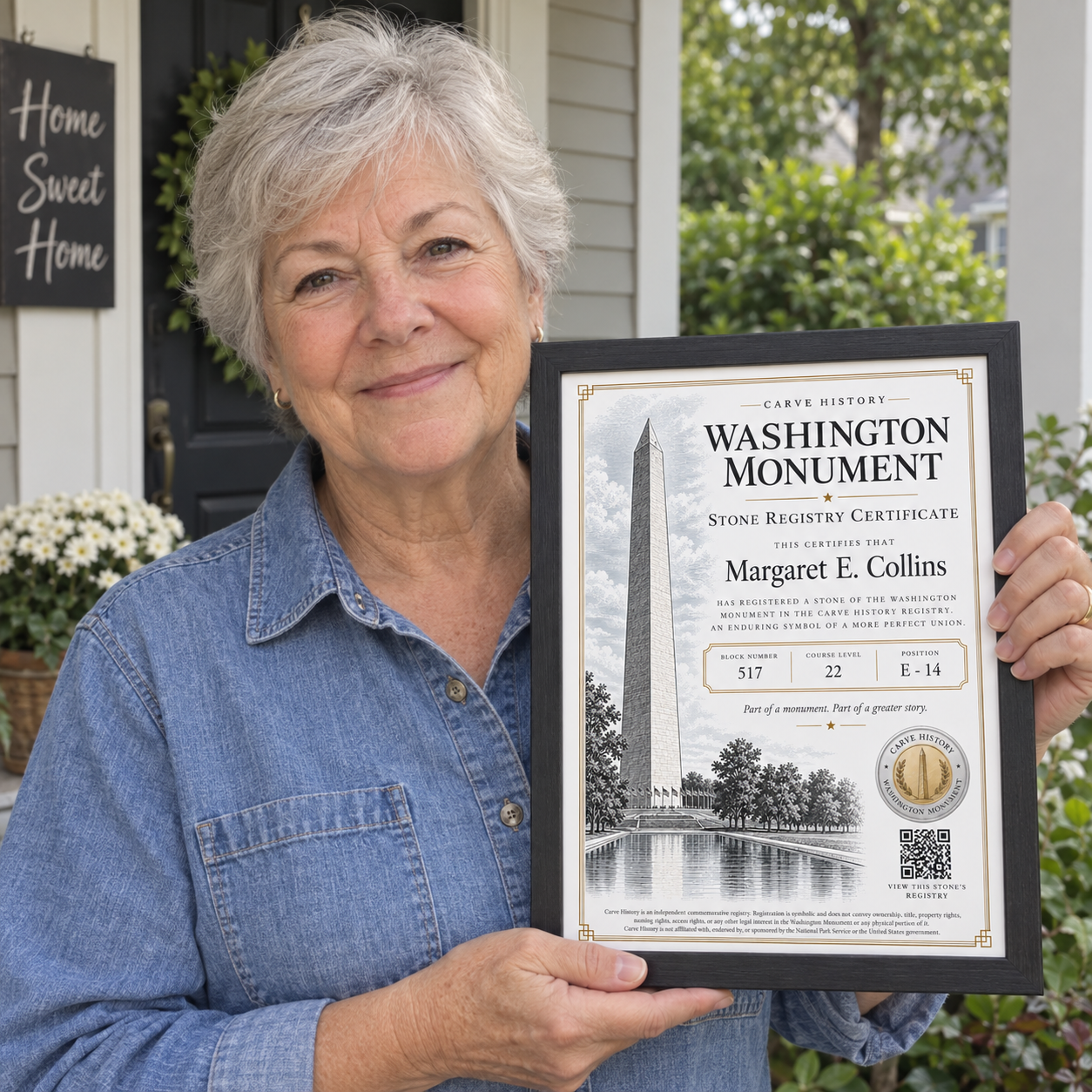
Carve History is an independent commemorative registry created to celebrate the history, architecture, and stories of remarkable landmarks. A Carve History registration is symbolic and commemorative. It does not convey ownership, title, property rights, naming rights, access rights, or any other legal interest in the landmark or any physical portion of it.
Carve History is not affiliated with, endorsed by, or sponsored by the National Park Service, the United States government, or the owners, operators, or governing organizations of featured landmarks unless expressly stated otherwise.