At The Crown
October 28, 1965
Crews used hydraulic pressure and even cooled sun-warmed steel to control the final fit before ironworkers eased the joining section into place6.
St. Louis, Missouri · Completed 1965
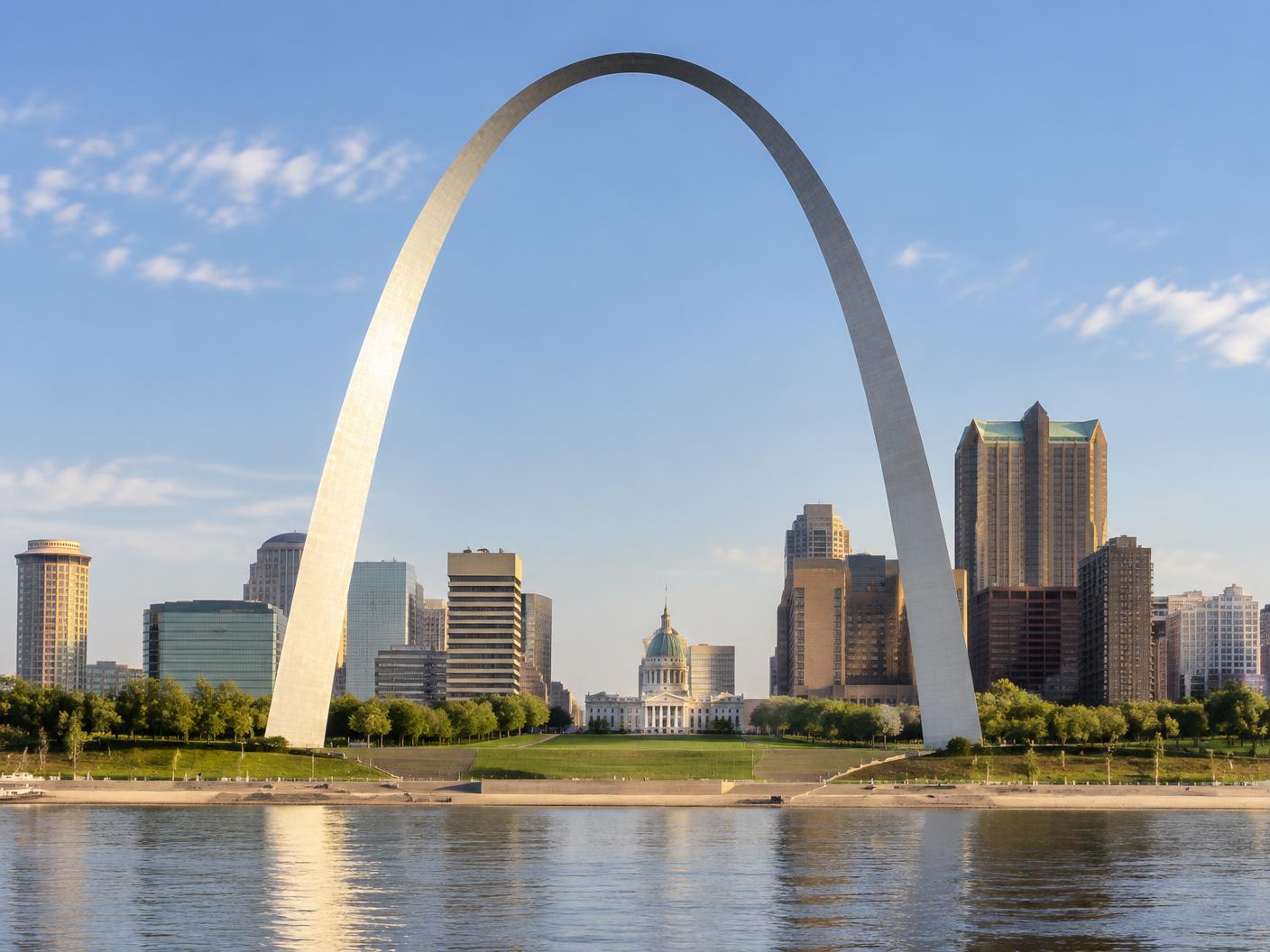
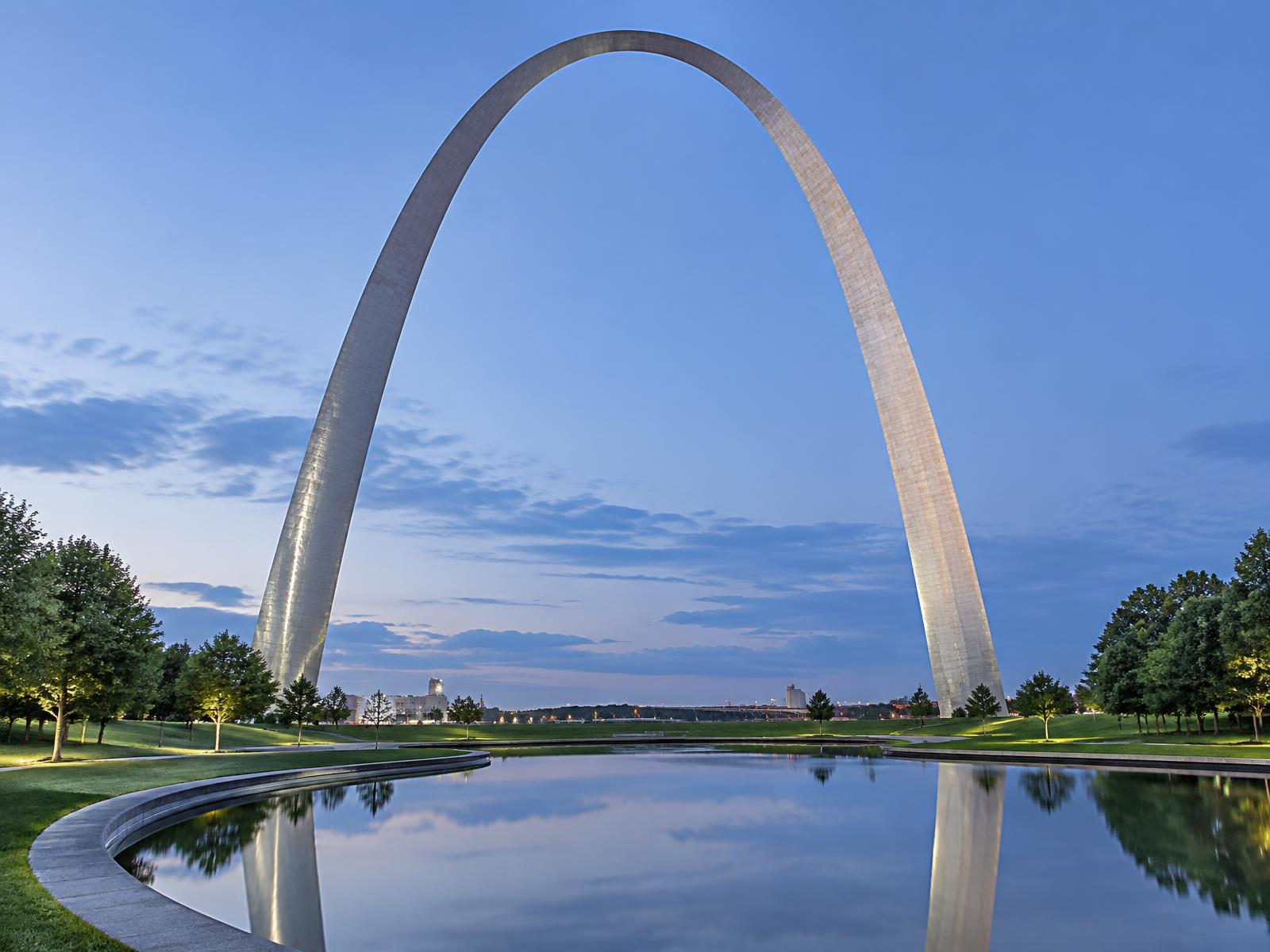
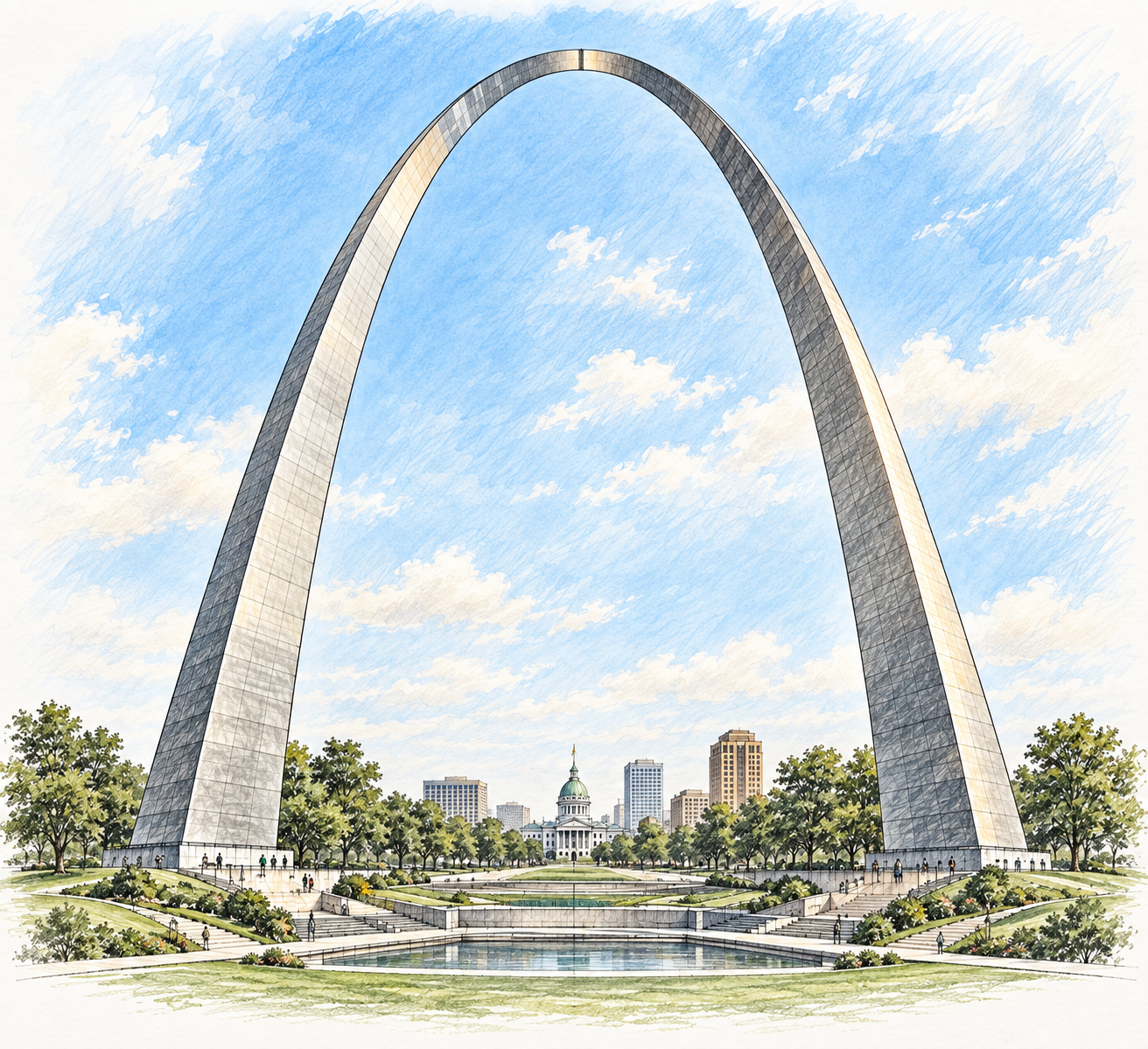
Rising 630 feet above the Mississippi riverfront, Eero Saarinen’s stainless-steel monument was assembled section by section. Now, for the first time, those 142 sections become 142 individual places in history, each available to be registered only once.
The Gateway To The West
Conceived in 1935 for the historic St. Louis riverfront, the memorial was created to commemorate Thomas Jefferson’s vision of a continental nation and the city’s pivotal role as a gateway for westward expansion3,10.
The riverfront had long been a meeting point for trade, migration, and exploration. The Park Service presents that legacy in full: as a story of national growth and movement, but also of conquest, displacement, and profound consequences for Indigenous peoples3.
Saarinen’s Design
A nationwide competition drew 172 entries. Eero Saarinen’s great stainless-steel curve was selected in 1948: neither an obelisk nor a classical dome, but a distinctly modern symbolic gateway at the Mississippi’s edge4,10.
1935
The riverfront memorial site was established.
1948
Eero Saarinen’s design won the national competition.
1963
Construction of the stainless-steel Arch began.
1965
The final section joined the legs on October 28.
54 ft
each side at base
17 ft
each side at crown
300 ft
concrete-filled
An Engineering Feat Unlike Anything Before It
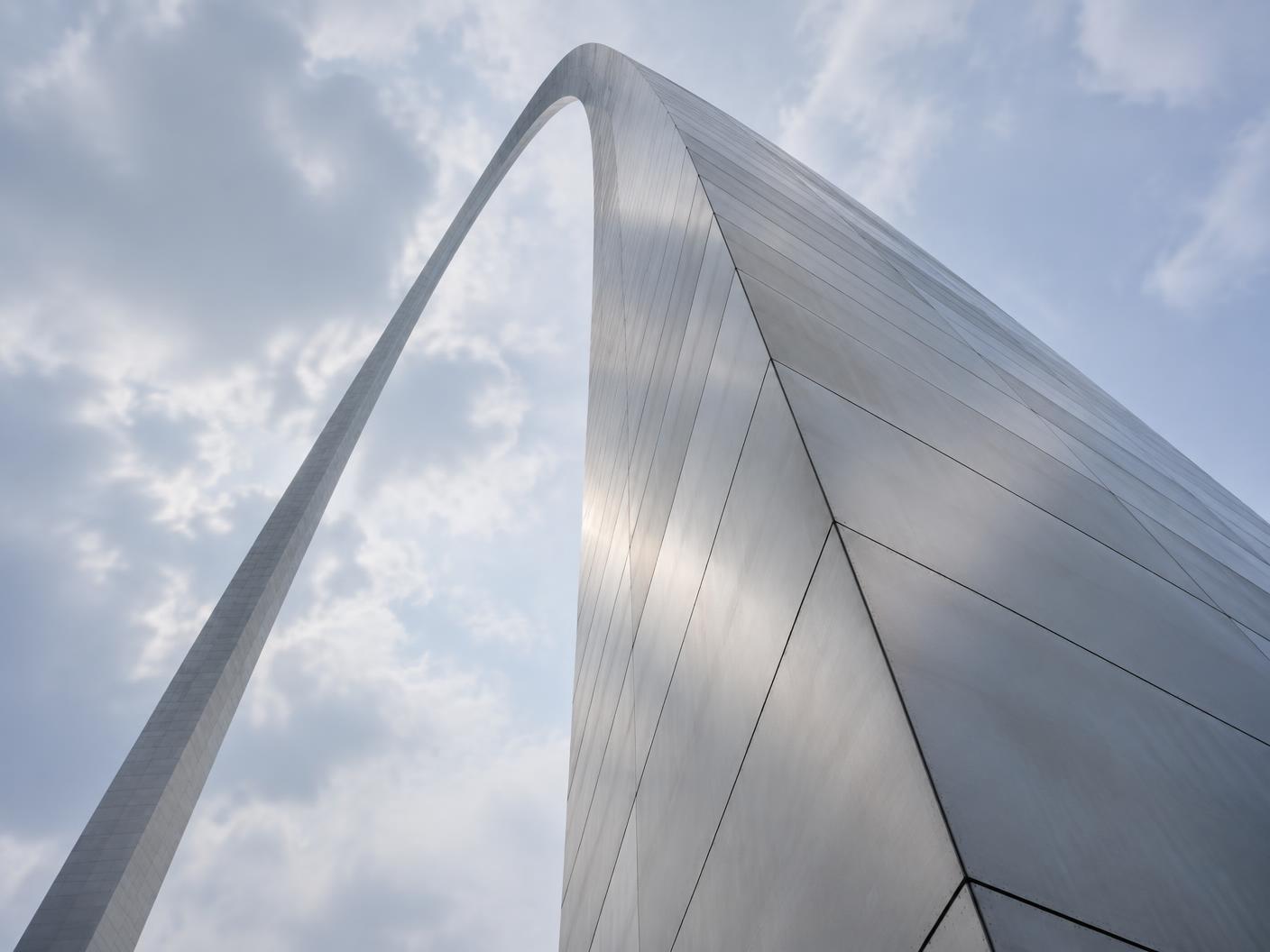
The Arch follows a weighted catenary, not a simple parabola. Its equilateral-triangle cross section tapers from 54 feet per side at ground level to 17 feet at the crown1,9.
Each double-walled section uses a quarter-inch stainless-steel exterior and a three-eighths-inch carbon-steel inner skin. Reinforced concrete fills the space between them to 300 feet; above that height, the structure is hollow1,2.
The steel skin is not decoration. It is the structure.
The legs climbed independently, section by section. Engineers continually measured, ground, shimmed, and welded each new piece to keep the curves true. On October 28, 1965, the final section closed the 630-foot span2,5,6.
60 ft
foundation depth
252
steel tendons per leg
18 in
designed crown movement in 150 mph wind
At The Crown
Crews used hydraulic pressure and even cooled sun-warmed steel to control the final fit before ironworkers eased the joining section into place6.
Inside The Curve
Dick Bowser devised rotating five-seat capsules because a conventional elevator could not follow the curved, narrowing legs7.
A Structural Record
Historic engineering records identify Saarinen’s design team, structural engineers, contractors, and the load-bearing shell that made the form possible2,8.
142 Sections. One Arch.
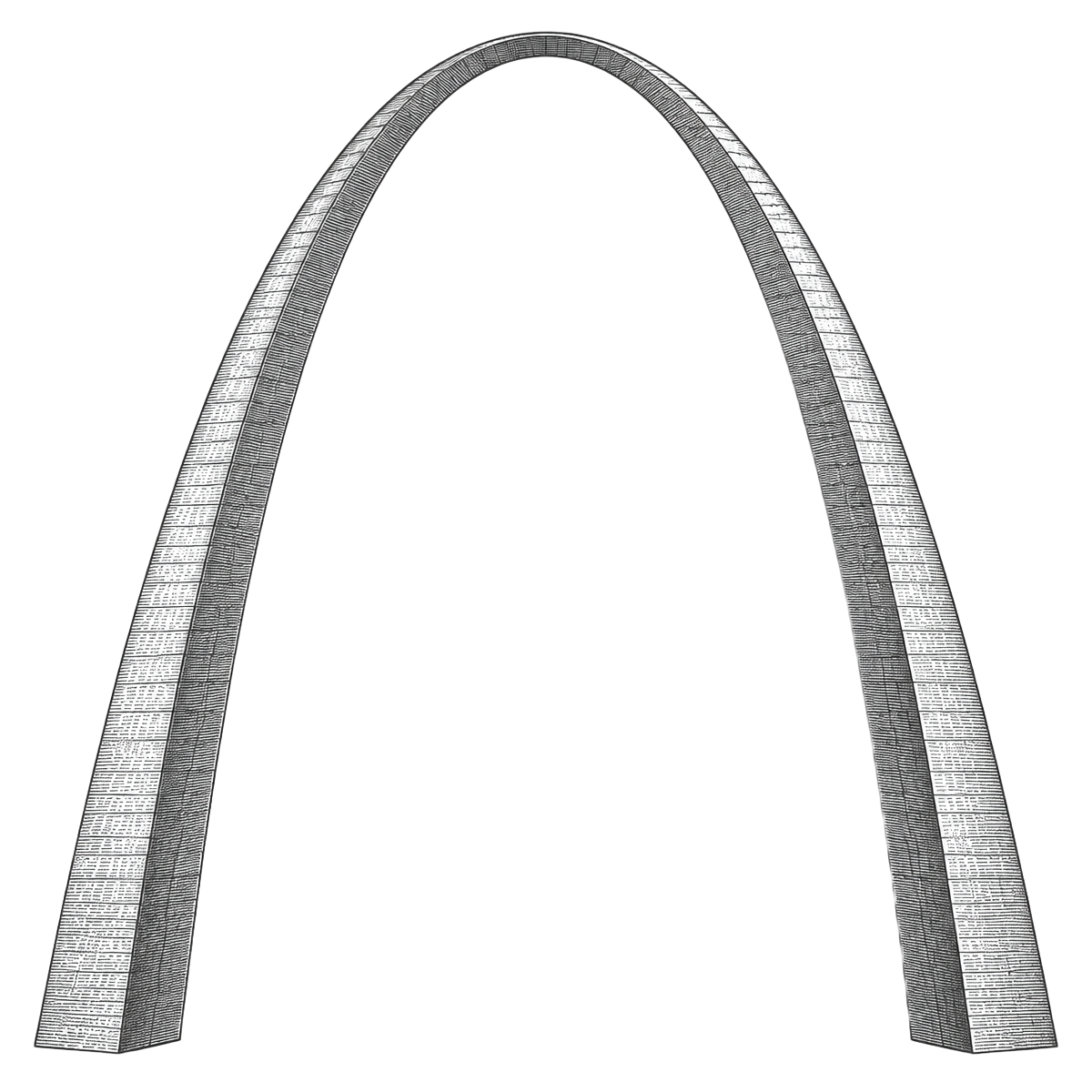
The Gateway Arch was not built as one continuous piece. Its two legs were assembled from 142 triangular structural sections, 71 on each side, progressively narrowing as they rose toward their final joining point1,5.
The Carve History Registry represents those 142 documented structural sections individually. It does not invent panel boundaries or subdivide the steel skin to create more inventory.
71
North leg
142
Total
71
South leg
142 sections. One Gateway Arch. One place in its history that can be yours.
Choose an individual structural section and register it in your name, or dedicate it to someone special. Each section can be claimed only once.
Digital Registry $39.95 · Framed options available
In View
A temporary preview collection
Sources & Accuracy
History, dimensions, materials, section count, and engineering details are drawn from National Park Service, Library of Congress, and peer-reviewed sources cited inline.
Carve History’s ground-to-crown section numbers and approximate elevations are reconstructed registry conventions, not official National Park Service designations.
The Registry
Carve History is an independent commemorative registry created to celebrate the history, architecture, and stories of remarkable landmarks. A Carve History registration is symbolic and commemorative. It does not convey ownership, title, property rights, naming rights, access rights, or any other legal interest in the landmark or any physical portion of it.
Carve History is not affiliated with, endorsed by, or sponsored by the National Park Service, the United States government, or the owners, operators, or governing organizations of featured landmarks unless expressly stated otherwise.